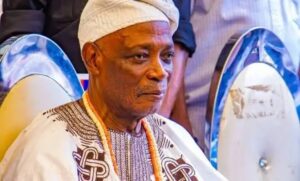
The process of selecting a new Olubadan of Ibadanland is steeped in tradition and cultural significance. As the paramount traditional ruler of Ibadan, the selection of the Olubadan is a matter of great importance to the people of Ibadanland. The Olubadan chieftaincy title is not only a traditional institution but also a symbol of unity and heritage for the Yoruba people.
The selection of a new Olubadan typically follows a well-established and intricate process that involves various traditional rites and consultations with relevant stakeholders. It is a process that upholds the customs and traditions of the Yoruba people and seeks to uphold the dignity and integrity of the chieftaincy title.

villagespec Magazine
One of the key aspects of the selection process is the involvement of the kingmakers, who play a pivotal role in identifying suitable candidates for the position of Olubadan. These kingmakers are typically senior chiefs who are well-versed in the customs and traditions of Ibadanland. Their wisdom and experience are crucial in ensuring that a worthy candidate is selected to ascend to the prestigious position of Olubadan.
Additionally, the selection process often involves a series of traditional rites and rituals that are conducted to seek the blessing and approval of the ancestors. These rituals are deeply rooted in the spiritual beliefs of the Yoruba people and are considered essential in legitimizing the selection of a new Olubadan.
Furthermore, the selection of a new Olubadan also commands the attention and involvement of the wider community. The input of various community leaders, elders, and prominent figures is often sought to ensure that the selection is inclusive and representative of the collective will of the people.
Sure, here’s a list of six important things you should know about the Obaship system in Ibadan:
- Rich History: The Obaship system in Ibadan has a rich history dating back to ancient times, with each successive king adding to the cultural heritage of the city.
- Chieftaincy Titles: Ibadan has a unique chieftaincy system where various titles are conferred on individuals based on their contributions to the community and their noble lineage.
- Central Role: The Oba (king) plays a central role in the traditional and cultural affairs of Ibadan, wielding significant influence and authority within the community.
- Succession Tradition: The succession to the throne of the Oba in Ibadan follows a traditional process deeply rooted in the customs and traditions of the Yoruba people.
- Custodians of Culture: The Obas in Ibadan serve as custodians of the rich Yoruba culture, preserving and promoting traditional practices, festivals, and customs.
- Community Leadership: Beyond symbolic significance, the Obaship system in Ibadan involves community leadership, conflict resolution, and upholding the unity and values of the people.
This provides a brief overview of the Obaship system in Ibadan, showcasing its historical, cultural, and community significance.
There are two lines of ascension to the throne of Olubadan. These are the Olubadan (Civil) Line and Balogun (Military) Line. After clinching the title of Mogaji from one’s compound. Depending on the line, such a person has 22 stages to climb in the Civil Line while that of the Military Line is 23 towards the throne of Olubadan. Both lines start from Jagun.
No Specific Royal House(s)
In most of the Yorùbá Obaship structure, there’s usually two or three ruling houses (or even more) who constitute the royal families. For those places, the ascension to the throne is rotated between only the royal families.
Chieftaincy Stages in the Civil Line (Olubadan or Egbe Agba)
Otun Olubadan
Osi Olubadan
Asipa Olubadan
Ekerin olubadan
Ekaarun Olubadan
Abese
Maye
Ẹkẹfa
Agba- Akin
Aare – Alasa
Ikọlaba
Asaju
Ayingun
Aare – Agọ
Laguna
Oota
Aare – Egbe – Omo
Gbonnka
Aare – Onibon
Bada
Ajia
Jagun
Chieftaincy Stages in the Military Line (Egbe Balogun)
Balogun
Otun Balogun
Osi Balogun
Asipa Balogun
Ekerin Balogun
Ekarun Balogun
Abese
Maye
Ẹkẹfa
Agba- Akin
Aare – Alasa
Ikọlaba
Asaju
Ayingun
Aare – Agọ
Laguna
Oota
Aare – Egbe – Omo
Gbonnka
Aare – Onibon
Bada
Ajia
Jagun
The two lines of the chieftaincy structure produce Olubadan on a rotational basis. Though there is also one Seriki line, it is meant to be a youth group fused into the Balogun line just as Iyaloja is, to the Civil line. That’s just by the way. The stool of Olubadan is alternated between the Olubadan line and Balogun line
…


Leave a Reply