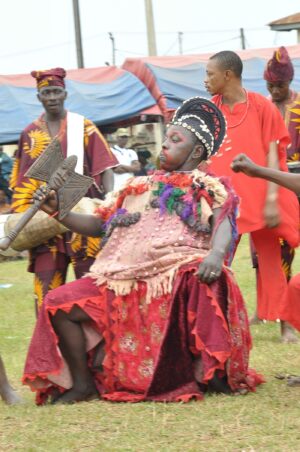
The Sango Festival is an annual celebration held among the Yoruba people in honor of Sango, a thunder and fire deity. Let’s delve into the fascinating details:
- Origins and Significance:
- The festival’s roots trace back over 1,000 years to the departure of Sango, a prominent Yoruba orisha (deity). Sango is widely regarded as the founding father of the Oyo people.
- Sango was a powerful ruler and magician who became the third king of the Oyo Empire after succeeding his elder brother, who was perceived as a “weak ruler.”
- During his reign, Sango was believed to bring prosperity to the Oyo Empire. His death is associated with various mythical stories, including the belief that he committed suicide to avoid humiliation from a powerful chief who ordered him to vacate his throne or face war.

- Festival Details:
- The Sango Festival takes place annually in August at the Palace of the Alaafin of Oyo.
- Since its renaming in 2013 to the World Sango Festival, it has gained international recognition. The event attracts over 20,000 spectators from around the world, including countries like Brazil, Cuba, Trinidad and Tobago, and the Caribbean.
- UNESCO has also recognized the festival, emphasizing its role in facilitating the homecoming of Yorubas in the diaspora and celebrating Sango as a hero in Yoruba history.
- Celebrations:
- The Sango Festival spans 10 days and is marked by pomp and pageantry.
- It begins with the Iwure Agba, which translates to the “prayer of the elders.” This prayer is led by the Sango priest.
- The festival serves as a cultural bridge, connecting Yorubas worldwide and honoring their ancestral heritage.
Next time the Sango Festival comes around, consider immersing yourself in this vibrant celebration of Yoruba culture and the legacy of Sango
The Sango Festival is rich with rituals and ceremonies that honor the thunder and fire deity, Sango. Here are some of the key rituals associated with the festival:
- Iwure Agba (Prayer of the Elders):
- The festival kicks off with the Iwure Agba, a solemn prayer led by the Sango priest. Elders and devotees gather to seek blessings and protection from Sango.
- During this ritual, participants express gratitude, make requests, and seek guidance from the deity. It sets the spiritual tone for the entire festival.
- Dance and Drumming:
- Music and dance play a central role in the Sango Festival. Devotees perform energetic dances accompanied by rhythmic drumming.
- The Bata drums, associated with Sango, are prominently featured. Dancers move in sync with the beats, invoking the deity’s presence.
- Firewalking:
- One of the most awe-inspiring rituals is the firewalking ceremony. Devotees walk barefoot across a bed of hot coals without getting burned.
- This act symbolizes Sango’s affinity for fire and his ability to protect his followers from harm.
- Offerings and Sacrifices:
- Devotees bring offerings to Sango, including kolanuts, palm wine, and other symbolic items.
- Animal sacrifices are also made at the shrine. Goats, chickens, or other animals are offered to appease the deity and seek his favor.
- Processions and Parades:
- Colorful processions wind through the streets, with devotees dressed in traditional attire.
- The Alaafin of Oyo (the Yoruba king) leads the grand parade, showcasing the cultural heritage of the Yoruba people.
- Spirit Possession:
- Some devotees experience spirit possession during the festival. They become vessels for Sango’s energy and communicate messages from the deity.
- It’s a powerful and mystical aspect of the celebration.
Remember that the Sango Festival is not only a religious event but also a cultural celebration that brings people together, fostering unity and pride in Yoruba traditions.


Leave a Reply